This song and the whole Minstrel In the Gallery album were recorded during a time when Ian Anderson's first marriage was coming to an end, and the songs have a kind of wistful, somewhat melancholy feel to them. He takes a look at where he is and what he's become and this is a kind of poem about it all.
The setting involves Ian Anderson walking down Baker Street in London and describing what he sees and where he sees himself in all of it. It's a gritty, kind of ugly picture. He sees scenes of sordid sexual encounters, drunks throwing up, and various faceless people. The middle section, Crash-barrier Waltzer, is one of the very best lyrical descriptions of his career. It's a poetic depiction of an encounter between a drunk old woman and a policeman. He compares it to ballet pas-de-deux, much like Romeo and Juliet, where the old woman, much like Juliet in the play, has fallen asleep, although her "sleeping draught" is alcohol. The policeman, much like Romeo, is struck with "poisoned regret" at the sight of her, although his version of regret is self-righteous anger instead of the romantic heartbreak of the original Romeo. The line "no drunken bums allowed to sleep here in the crowded emptiness" is pure genius. He's saying the the urban streets are crowded with people, and yet somehow empty at the same time - empty of meaning and substance. Everything is empty.
The last portion is Ian Anderson summing up his life as an artist up to that point. The line about his having no time for time magazine or Rolling Stone may have something to do with the fact that Jethro Tull has been excluded from the Rock and Roll Hall of Fame. IA liked to express how he felt about the critics with obscene gestures at the time, and the feeling has been mutual with a lot of critics, even though songs like this one deserve a whole lot more critical acclaim than they have ever remotely received. The little boy standing on a burning log image is a kind of symbolic self-image in that same mold, with IA not being sure if Mother England likes him or wants to burn him.
Another fantastic line comes near the end, where IA says "If sometimes I sing to a cynical degree, it's just the nonsense that it seems." He's dismissing himself and his own importance in a great gesture of irony, laughing at himself and the world in general.
This is a tremendously thoughtful, evocative, and interesting kind of song that takes multiple listenings to really appreciate. That was one reason why a number of critics turned on Tull and Ian Anderson in the end, because they didn't want to have to think about what was being said in order to understand it, but I always thought that this song and the whole album were true genius, some of the best stuff ever written.
@JT1968 Yes I think you're onto it. I wonder though if part of it is his imagining what it's like to be part of that world... to be a street performer scraping by, ignored by women, subject to all the mess and pain of Baker street. He, the narrator is temporarily living a dual existence imagining a scenario where he ended up living the Baker street life instead of the one he is in.
@JT1968 Yes I think you're onto it. I wonder though if part of it is his imagining what it's like to be part of that world... to be a street performer scraping by, ignored by women, subject to all the mess and pain of Baker street. He, the narrator is temporarily living a dual existence imagining a scenario where he ended up living the Baker street life instead of the one he is in.
You could interpret this in lines like "You" (the blind Baker street busker flutist mentioned in a preceding line) "can call me" (Ian Anderson picturing his...
You could interpret this in lines like "You" (the blind Baker street busker flutist mentioned in a preceding line) "can call me" (Ian Anderson picturing his alternate timeline if you will) "on another line." Or more clearly later in the song: "I tried to catch my eye but I looked the other way"; so while wondering what it would be like to encounter this alternate poor/failed self in his world of Baker street suffering, he, the actual Ian, pictures himself trying to make eye contact with his other self. We can't be sure if Ian is trying to make eye contact with the alternate blind street performer self or vice versa or be sure who looks away... implying that the narrator himself for a moment doesn't know who is who.
Even if what I've laid out isn't quite right, the song is, as you say, clearly self-effacing. The narrator insists his is just a Baker street muse and only someday might be the successful, revered, minstrel in the gallery. Ian sees himself here, in this mood anyway, as a modest, insignificant performer.
But if I'm onto something, this imagining of various possibilities, various selves and switching perspectives-- all while commenting on his doing so even as he does it, is, well, undeniably not normal. Who the fuck writes lyrics like that?! Someone exceptional, someone brilliant-- a truly creative person I would say.


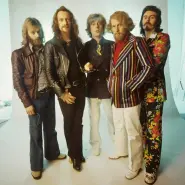
This song and the whole Minstrel In the Gallery album were recorded during a time when Ian Anderson's first marriage was coming to an end, and the songs have a kind of wistful, somewhat melancholy feel to them. He takes a look at where he is and what he's become and this is a kind of poem about it all.
The setting involves Ian Anderson walking down Baker Street in London and describing what he sees and where he sees himself in all of it. It's a gritty, kind of ugly picture. He sees scenes of sordid sexual encounters, drunks throwing up, and various faceless people. The middle section, Crash-barrier Waltzer, is one of the very best lyrical descriptions of his career. It's a poetic depiction of an encounter between a drunk old woman and a policeman. He compares it to ballet pas-de-deux, much like Romeo and Juliet, where the old woman, much like Juliet in the play, has fallen asleep, although her "sleeping draught" is alcohol. The policeman, much like Romeo, is struck with "poisoned regret" at the sight of her, although his version of regret is self-righteous anger instead of the romantic heartbreak of the original Romeo. The line "no drunken bums allowed to sleep here in the crowded emptiness" is pure genius. He's saying the the urban streets are crowded with people, and yet somehow empty at the same time - empty of meaning and substance. Everything is empty.
The last portion is Ian Anderson summing up his life as an artist up to that point. The line about his having no time for time magazine or Rolling Stone may have something to do with the fact that Jethro Tull has been excluded from the Rock and Roll Hall of Fame. IA liked to express how he felt about the critics with obscene gestures at the time, and the feeling has been mutual with a lot of critics, even though songs like this one deserve a whole lot more critical acclaim than they have ever remotely received. The little boy standing on a burning log image is a kind of symbolic self-image in that same mold, with IA not being sure if Mother England likes him or wants to burn him.
Another fantastic line comes near the end, where IA says "If sometimes I sing to a cynical degree, it's just the nonsense that it seems." He's dismissing himself and his own importance in a great gesture of irony, laughing at himself and the world in general.
This is a tremendously thoughtful, evocative, and interesting kind of song that takes multiple listenings to really appreciate. That was one reason why a number of critics turned on Tull and Ian Anderson in the end, because they didn't want to have to think about what was being said in order to understand it, but I always thought that this song and the whole album were true genius, some of the best stuff ever written.
@JT1968 Yes I think you're onto it. I wonder though if part of it is his imagining what it's like to be part of that world... to be a street performer scraping by, ignored by women, subject to all the mess and pain of Baker street. He, the narrator is temporarily living a dual existence imagining a scenario where he ended up living the Baker street life instead of the one he is in.
@JT1968 Yes I think you're onto it. I wonder though if part of it is his imagining what it's like to be part of that world... to be a street performer scraping by, ignored by women, subject to all the mess and pain of Baker street. He, the narrator is temporarily living a dual existence imagining a scenario where he ended up living the Baker street life instead of the one he is in.
You could interpret this in lines like "You" (the blind Baker street busker flutist mentioned in a preceding line) "can call me" (Ian Anderson picturing his...
You could interpret this in lines like "You" (the blind Baker street busker flutist mentioned in a preceding line) "can call me" (Ian Anderson picturing his alternate timeline if you will) "on another line." Or more clearly later in the song: "I tried to catch my eye but I looked the other way"; so while wondering what it would be like to encounter this alternate poor/failed self in his world of Baker street suffering, he, the actual Ian, pictures himself trying to make eye contact with his other self. We can't be sure if Ian is trying to make eye contact with the alternate blind street performer self or vice versa or be sure who looks away... implying that the narrator himself for a moment doesn't know who is who.
Even if what I've laid out isn't quite right, the song is, as you say, clearly self-effacing. The narrator insists his is just a Baker street muse and only someday might be the successful, revered, minstrel in the gallery. Ian sees himself here, in this mood anyway, as a modest, insignificant performer.
But if I'm onto something, this imagining of various possibilities, various selves and switching perspectives-- all while commenting on his doing so even as he does it, is, well, undeniably not normal. Who the fuck writes lyrics like that?! Someone exceptional, someone brilliant-- a truly creative person I would say.