I agree with everyone's interpretations of the song being about Bauhaus growing up in Northampton- 'barbed wire', 'Factorytown'. This song is in a way similar to Bowie's Life On Mars song - sorry for another Bowie comparison, Bauhaus. But, instead of asking 'is there life on Mars?' (I wish I could move away, Mars is better than England), it goes on about the desire to escape through fame ('All we ever wanted was everything'). I mean, considering this is from their last album, where the band's split was being seen as almost inevitable at the time (I imagine), the song to me sounds like a reflection on Bauhaus's original motives in comparison to their feelings after releasing 3 well received albums. I think the 'All to be the cream' part refers to the idea of wanting to be the 'creme de la creme' (best of the best), which was most likely one of the bands original desires. That line, and the whole song in general, sounds like it's written from a retrospective viewpoint, suggesting that in their early years, Bauhaus were naive, and that towards the end of their musical career, their motives changed.


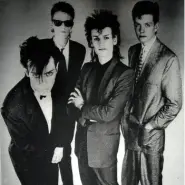
I agree with everyone's interpretations of the song being about Bauhaus growing up in Northampton- 'barbed wire', 'Factorytown'. This song is in a way similar to Bowie's Life On Mars song - sorry for another Bowie comparison, Bauhaus. But, instead of asking 'is there life on Mars?' (I wish I could move away, Mars is better than England), it goes on about the desire to escape through fame ('All we ever wanted was everything'). I mean, considering this is from their last album, where the band's split was being seen as almost inevitable at the time (I imagine), the song to me sounds like a reflection on Bauhaus's original motives in comparison to their feelings after releasing 3 well received albums. I think the 'All to be the cream' part refers to the idea of wanting to be the 'creme de la creme' (best of the best), which was most likely one of the bands original desires. That line, and the whole song in general, sounds like it's written from a retrospective viewpoint, suggesting that in their early years, Bauhaus were naive, and that towards the end of their musical career, their motives changed.