And Derrida was an atheist of Jewish extraction who spent his rather prolific life as a philosopher working on expanding and demarcating the good bits of Levinas' work (a practicing Jewish person who used to claim, hilariously, that his sociological publications and his religious publications were on different publishers so quit asking him about the god thing). Later Derrida would often refer, using Levinas' language and expanding on it, to the "trace of God" or "the shadow of the trace" found in the context, text, and subtext of various kinds of real interactions.
And Derrida was an atheist of Jewish extraction who spent his rather prolific life as a philosopher working on expanding and demarcating the good bits of Levinas' work (a practicing Jewish person who used to claim, hilariously, that his sociological publications and his religious publications were on different publishers so quit asking him about the god thing). Later Derrida would often refer, using Levinas' language and expanding on it, to the "trace of God" or "the shadow of the trace" found in the context, text, and subtext of various kinds of real interactions.
From an anthropological...
From an anthropological context, spirituality and music are the two uniform things we have somehow managed to more or less all do, to some regard, from ancient tribes' animism to modern christianity or whatever. Spirituality and religion have, for better or worse, informed the human experience deeply; and so even though it may not carry a literal meaning - or even though it may seem, in context, to /be/ religious and not to really make sense unless it is literal - imo Devin's simply drawing on a fairly rich source material that most of his audience will be at least passingly familiar with, offering great metaphorical coherence when working with subject matter as evocative as music.
Most members of Greek nobility, in day-to-day life, weren't especially pious, but that doesn't mean they didn't draw very freely from their religious traditions when discussing difficult subjects. Metaphors can illuminate. Don't always, though. Up to the listener whether Devin's metaphors mean something more to said listener. As to the hermeneutics of what Devin intends, well, if you ever get a chance to ask him, by all means :p


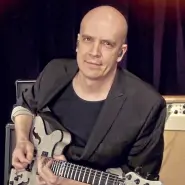
Though Devin says he doesn't want to bring religion and politics to his songs, he sure keeps alluring to an afterlife (or deities) quite often.
And Derrida was an atheist of Jewish extraction who spent his rather prolific life as a philosopher working on expanding and demarcating the good bits of Levinas' work (a practicing Jewish person who used to claim, hilariously, that his sociological publications and his religious publications were on different publishers so quit asking him about the god thing). Later Derrida would often refer, using Levinas' language and expanding on it, to the "trace of God" or "the shadow of the trace" found in the context, text, and subtext of various kinds of real interactions.
And Derrida was an atheist of Jewish extraction who spent his rather prolific life as a philosopher working on expanding and demarcating the good bits of Levinas' work (a practicing Jewish person who used to claim, hilariously, that his sociological publications and his religious publications were on different publishers so quit asking him about the god thing). Later Derrida would often refer, using Levinas' language and expanding on it, to the "trace of God" or "the shadow of the trace" found in the context, text, and subtext of various kinds of real interactions.
From an anthropological...
From an anthropological context, spirituality and music are the two uniform things we have somehow managed to more or less all do, to some regard, from ancient tribes' animism to modern christianity or whatever. Spirituality and religion have, for better or worse, informed the human experience deeply; and so even though it may not carry a literal meaning - or even though it may seem, in context, to /be/ religious and not to really make sense unless it is literal - imo Devin's simply drawing on a fairly rich source material that most of his audience will be at least passingly familiar with, offering great metaphorical coherence when working with subject matter as evocative as music.
Most members of Greek nobility, in day-to-day life, weren't especially pious, but that doesn't mean they didn't draw very freely from their religious traditions when discussing difficult subjects. Metaphors can illuminate. Don't always, though. Up to the listener whether Devin's metaphors mean something more to said listener. As to the hermeneutics of what Devin intends, well, if you ever get a chance to ask him, by all means :p